How much of your loan book is stuck in accounts that simply will not pay on time? For most NBFCs, that number grows faster than the recovery team can keep up with.
The work piles up quickly, too. Thousands of borrowers, each needing reminders, calls, and follow-ups, across different stages of delinquency. And only a few collection officers and a set of spreadsheets that cannot keep pace.
As a result, accounts slip through. Reminders go out late, follow-ups get missed, and money that could have been recovered ages into a write-off.
Debt collection software is built to close that gap. It automates borrower outreach, sorts accounts by priority, and tracks every case so nothing falls through the cracks. These tools also show your repayment patterns and recovery performance across the loan book.
In this guide, we explain what these platforms do and share the 7 best tools in India for debt recovery and resolution.
At a glance: Compare automated debt collection software options
Here’s a quick look at the tools that help you recover outstanding dues and resolve the disputes that follow:
| Software name | Best for | Key strength | Main Limitation |
| CADRE (India’s simplest online dispute resolution platform) | Post-default resolution with real-time visibility into every case | Portfolio-wide case tracking with multiple online resolution routes | Fits the resolution stage |
| Credgenics | High legal escalation rates | Real-time legal case tracking | Unsuitable for small-scale lenders |
| CredResolve | Outcome-based managed recovery | Owns its recovery infrastructure | Less self-run control |
| Spocto X | Early-stage delinquency prevention | Predictive borrower-intent scoring | Weaker on late-stage legal |
| M2P Fintech | Native-language borrower outreach | Multilingual chatbot and calling | Part of the wider stack |
| Dista Collect | Field-heavy NBFC collections | Location-based case allocation | Limited legal recovery tooling |
| GoCollect | Scheduled multi-channel EMI reminders | Automated multi-channel reminders | Lighter on legal recovery |
What is debt collection software?
Debt collection software manages the recovery stage of the loan lifecycle. It is typically a cloud-based solution that handles borrower communication, payment tracking, collection insights, and compliance after an account turns delinquent.
These tools offer dedicated analytics features that follow borrower payment trends and measure collection outcomes. Teams can see which accounts need attention first.
Key features to look for in a debt collection software solution
Recovering debt in India and at scale needs reach, speed, and a clear audit trail, all without breaching compliance. The right debt collection platform supports each of those.
So, look for a solution that offers these features before you commit:
- Omnichannel communication: Reach borrowers across WhatsApp, SMS, email, voice, and IVR from one place
- Analytics and reporting: Track recovery rates, repayment behaviour, and portfolio health, with dashboards that flag accounts needing action
- System integration: The debt collection platform should sync cleanly with your LMS, core banking, CRM, and payment gateways
- Segmentation and prioritisation: Sort accounts by risk, value, and DPD bucket so effort follows recovery probability
- Security and data protection: Confirm access controls, encryption, consent handling, and audit logs that support compliance with the DPDP Act, 2023
7 best debt collection software tools for lenders and NBFCs
Here are seven digital debt collection tools that support a range of recovery needs, from digital outreach to legally binding resolution.
To build this list, we looked at which stages of recovery each tool covers, the analytics and visibility it gives your team, and the depth of its compliance and channel support.
Take a look at these tools alongside their key features and limitations to find the right fit:
1. CADRE: India’s simplest online dispute resolution platform
Best for: Post-default case resolution with real-time tracking and visibility
CADRE is an online dispute resolution platform for debt recovery and commercial disputes. It gives lenders structured visibility over accounts after default, with real-time status tracking across every case, whether you log one dispute or thousands.
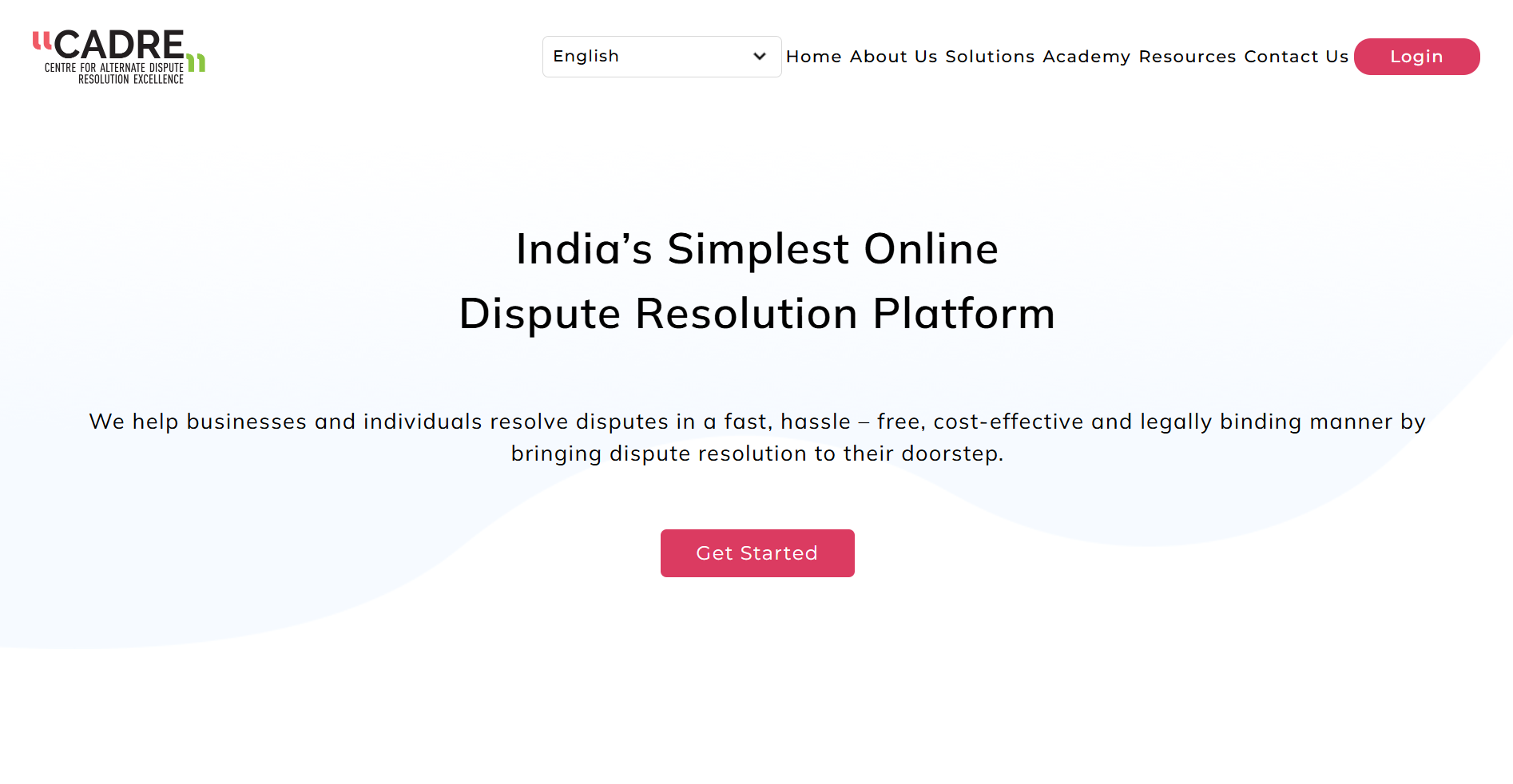
You get access to a curated panel of experienced professionals to handle your disputes, plus multichannel communication and clear analytics. The platform features templates for notices, claim statements, and all related documents, so you don’t have to draft these from scratch for every case.
Features of CADRE
- Real-time case tracking: Notice delivery and call status are tracked live across channels, with weekly MIS reports for portfolio-wide visibility
- Multiple resolution routes: Arbitration, mediation, and conciliation chosen to fit the account
- Single case officer: A single point of contact administers each matter end-to-end
- Bulk dispute upload: Log claims individually or in bulk for high-volume portfolios
- Multichannel notices: Borrowers are reached via WhatsApp, SMS, email, and voice, in multiple Indian languages
- Legally binding awards: Outcomes are enforceable, delivered on stamped paper to both parties
- Documents-only proceedings: Cases may proceed on the record of documents, with optional hearings at the arbitrator’s discretion
Limitations
- Built for post-default resolution, so it complements collection tools
CADRE pricing
CADRE keeps pricing transparent and upfront, scaled to the value of the case.
| Value of the case | Fees (INR), Starting at |
| Up to 1 Lakh | 1,900 |
| 1 – 2 Lakh | 2,400 |
| 2 – 5 Lakh | 2,900 |
| 5 – 10 Lakh | 3,400 |
| 10 – 25 Lakh | 7,000 |
| 25 – 50 Lakh | 15,000 |
| 50 Lakh – 1 Crore | 30,000 |
| Above 1 Crore | Case‑by‑case basis |
A few things to keep in mind:
- Mediation is priced separately, from ₹5,000 up to 2% of the claim, based on case complexity. It includes up to three sessions, with extra sessions available on request.
- GST and out-of-pocket expenses are not included in the listed fees.
Learn more about online dispute resolution platforms in India
2. Credgenics
Best for: Lenders with high legal escalation
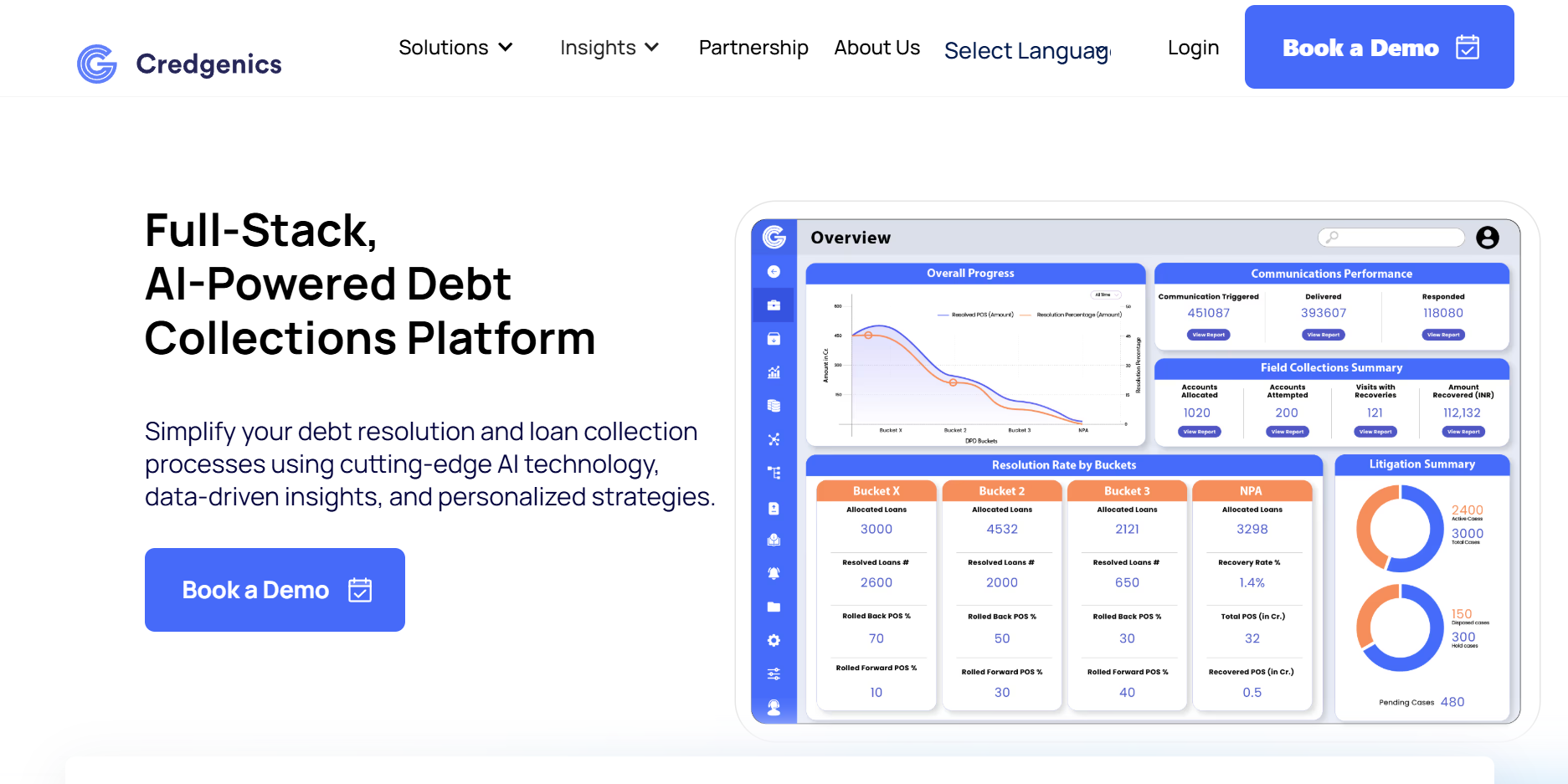
Credgenics is a SaaS-based debt collection platform that handles recovery across retail and unsecured loan portfolios. Its dashboards give a portfolio-wide view of collections progress, while data models flag which accounts deserve attention and when.
Features
- Borrower outreach across SMS, email, WhatsApp, IVR, and calling, with single-click payment links
- ML models that score each borrower’s reachability and likelihood of repaying
- GenAI voicebots that run follow-ups and gauge a borrower’s willingness to pay
- A/B testing and campaign monitoring to refine outreach over time
Limitations
- Not particularly built for small-scale lenders
- Advanced reporting and customisation often carry additional charges
Pricing
Quote-based, not publicly disclosed
Check out our guide on the best loan recovery software tools in India
3. CredResolve
Best for: Outcome-based, infrastructure-led recovery
CredResolve operates its own collection infrastructure, combining AI, digital channels, and legal automation in a single platform. You can track recovery outcomes in real time, with full visibility into each account’s progress.
Features
- AI connectivity scoring to find the best way and time to reach each borrower
- Borrower segmentation that shapes the recovery strategy per account
- Automated digital campaigns paired with integrated payment collection
- Digital legal notices and online litigation handling for escalated accounts
Limitations
- Suits lenders wanting a managed service over a self-run tool
- AI scoring depends on borrower data quality, so patchy data weakens results
Pricing: Quote-based, not publicly disclosed
Learn about the difference between arbitration and litigation
4. Spocto X
Best for: Early-stage delinquency prevention
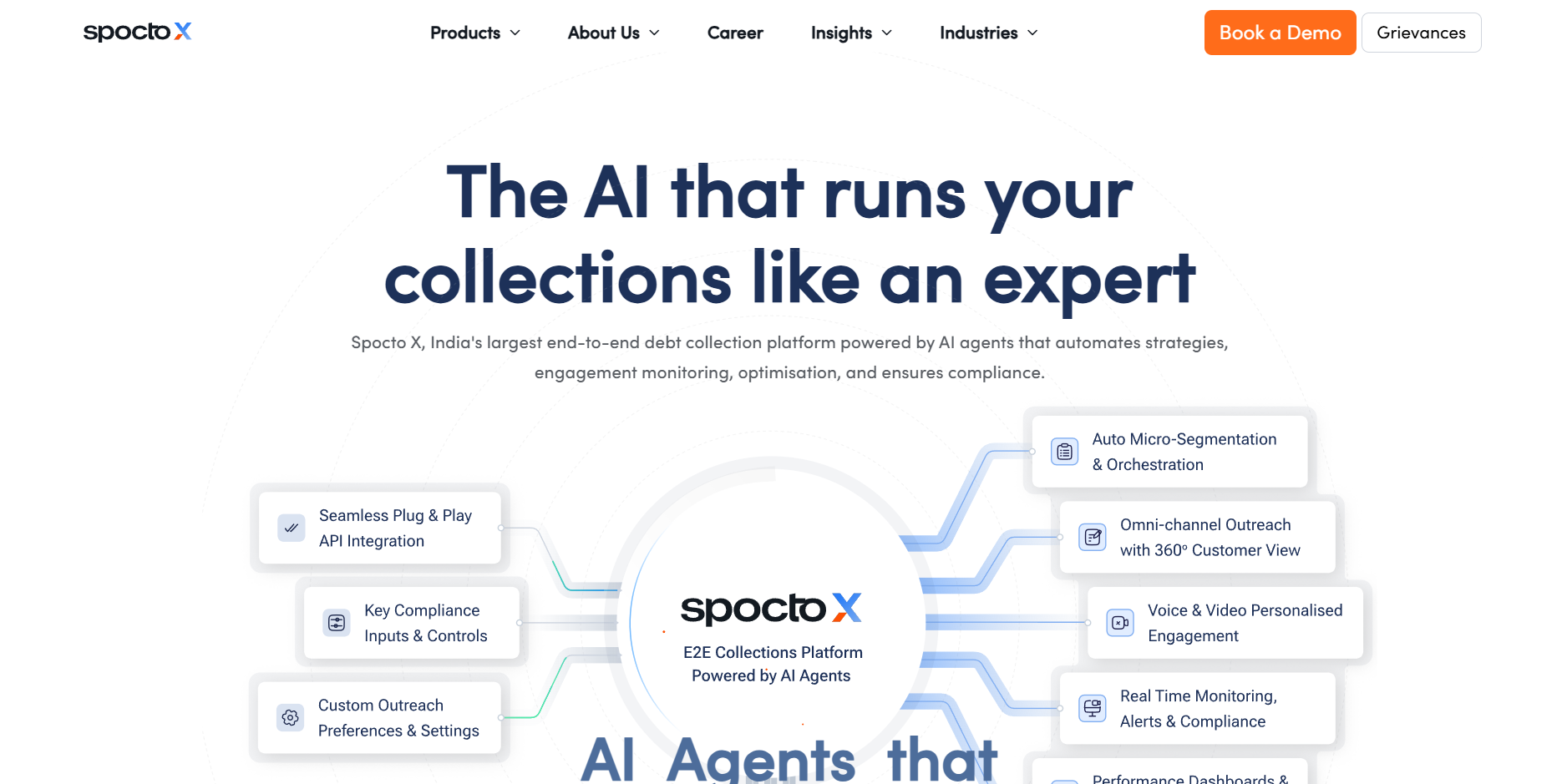
Spocto X is automated debt collection software that uses predictive analytics to act before an account hardens into default. It scores borrower intent and prioritises early-bucket cases. The goal is to resolve them digitally, before they escalate to field or legal action.
Features
- Multilingual conversational AI engine handling borrower interactions in 20+ languages
- Built-in AI compliance monitoring aligned to regulatory norms
- Customisable collection workflows built on borrower insights
- Reporting on agent productivity, field visits, and agency-wise performance
Limitations
- Strongest in early buckets; late-stage legal recovery is less of a focus
- Steep learning curve and integration complexities
Pricing: Quote-based, not publicly disclosed
5. M2P Fintech
Best for: Native-language borrower conversations
M2P Collect is a debt collection software for banks and NBFCs, built around a native-language chatbot with integrated telephony. It reaches borrowers in their own language via automated channels, handles calls within the same platform, and reports collection performance in real time.
Features
- Instant payment links accepting any digital payment method
- Campaigns across digital and non-digital channels, including SMS and tele-calling
- Real-time reporting and analytics for managing telecallers and agencies
- Optional field app with geotagging for on-ground agent tracking
Limitations
- Part of M2P’s wider lending stack, which may appeal more to existing M2P clients
- The geotagging field app is an optional add-on, not part of the core platform
Pricing: Quote-based, not publicly disclosed
6. Dista Collect
Best for: Field-heavy NBFC collections
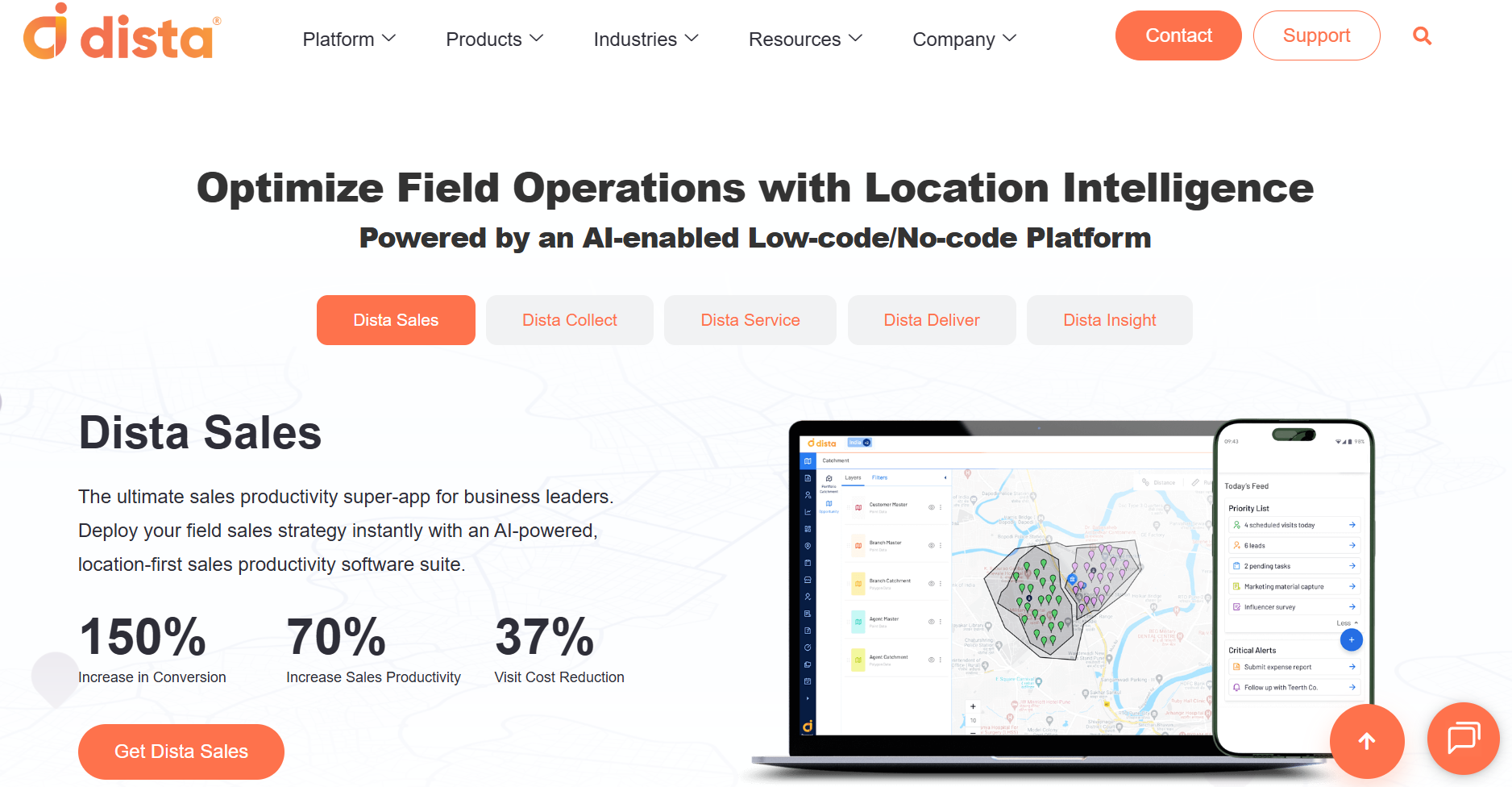
Dista Collect is a debt collection and recovery software that applies location intelligence to field recovery. The platform assigns each case to the field agent who is nearest, best suited, and matched to the account’s risk.
Features
- Digital pre-due reminders to contain early-stage delinquencies
- Customer 360 view gives agents full borrower history and repayment patterns
- Digital settlements and one-click payment links from the field app
- Repossession, asset disposal, and cash reconciliation for secured portfolios
Limitations
- Heavier platform suited to mid-sized and larger field operations
- Focused on field and digital collection, with limited legal-recovery tooling like litigation tracking
Pricing: Quote-based, not publicly disclosed
7. GoCollect (by Credility)
Best for: Scheduled, multi-channel EMI reminders
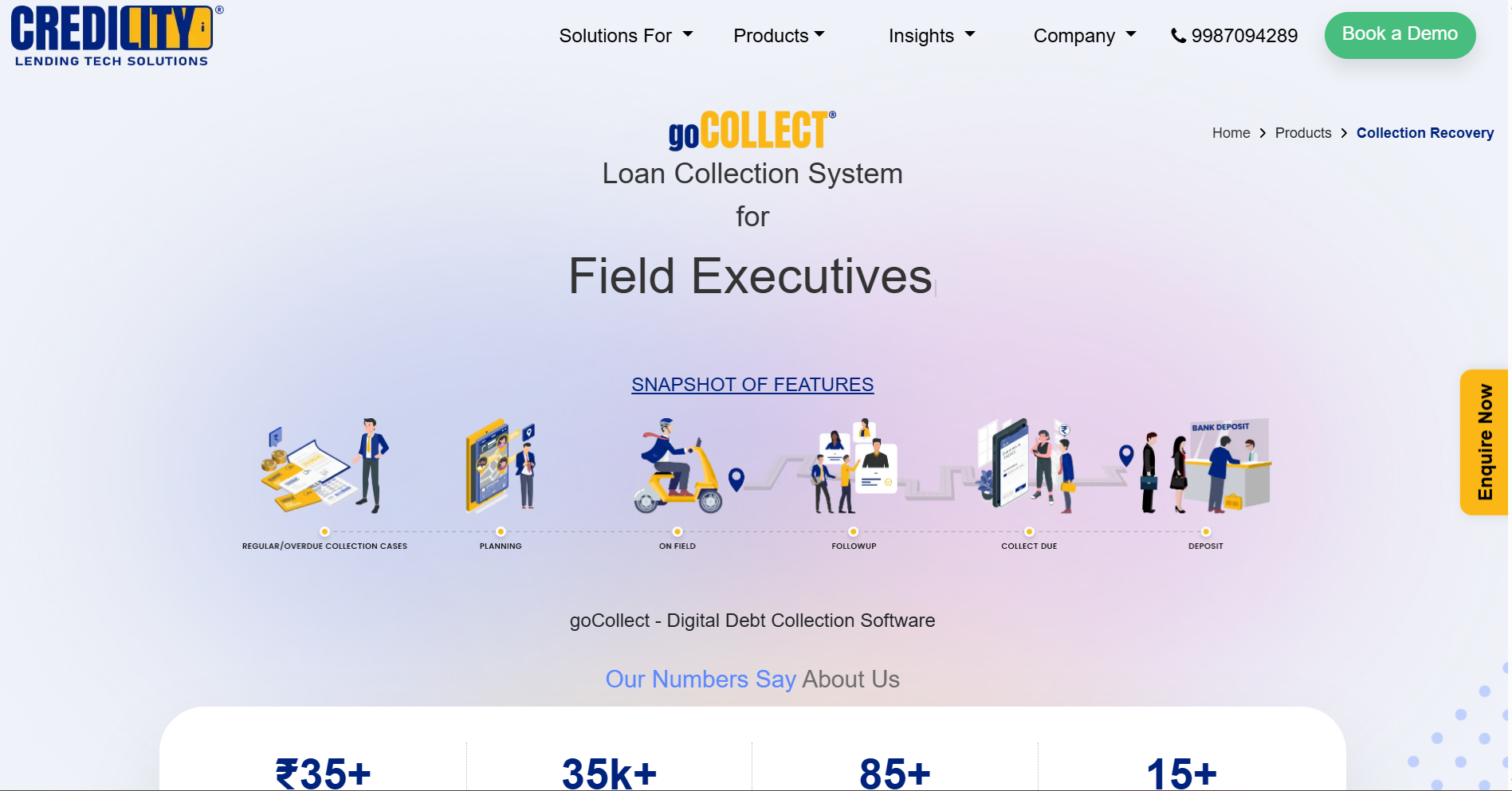
GoCollect by Credility is debt collection management software with strong multichannel digital reminders. A central dashboard shows collections progress, portfolio health, and payment behaviour insights in real time.
Features
- Case allocation to tele-callers or field agents by delinquency stage
- Borrower payment links and digital payment options to ease repayment
- Real-time field tracking with map-view location of agents
- Agent productivity tracking by individual, team, branch, and region
Limitations
- Field and cash-collection focus offers less for digital-only lenders
- Lighter on legal-recovery tooling than litigation-focused platforms
Pricing: Quote-based, not publicly disclosed
Explore our guide on legal notices for recovery of money
Which is the best debt collection software in India?
As delinquencies rise, the right debt collection software solution decides how much you recover and how fast. The wrong stack leaves accounts stuck and costs climbing.
When making the choice, match the debt collection platform to portfolio size, your ticket values, and the channels your borrowers respond to. Check how it handles your recovery needs and how much visibility it provides your team throughout the process.
Use free demos to assess whether the tool fits your portfolio and meets your needs.
When you need to go beyond collection, CADRE (India’s simplest online dispute resolution platform) resolves the dispute itself. It runs the entire process online and reaches a binding award in a fraction of the time it takes a court. With real-time tracking and MIS reports, it keeps you on top of every case throughout.
FAQs on debt recovery
The four common types are secured (backed by collateral), unsecured (no collateral), revolving (a reusable credit line), and instalment debt (repaid in fixed EMIs).
It is a US rule limiting a collector to seven contacts in seven days for one debt. India has no such fixed number; the RBI’s Fair Practices Code instead requires fair, non-harassing recovery.
The seven-year figure is a US concept. In India, the Limitation Act 1963 generally gives a creditor three years to file a recovery suit, after which the court remedy may be time-barred, though the debt itself remains.
AI helps lenders work accounts smarter. It segments borrowers by likelihood of payment, selects the best channel and timing to reach them, and flags accounts that need escalation. This lets teams focus their effort where recovery is most likely.